Overview
Gladiator Game (Prototype) is an experimental asynchronous multiplayer game built to explore how a server-driven game could work in practice. The core idea was simple: create a gladiator, build a loadout from randomized shop items and weapons, and send them into automated battles against other players' gladiators.
While the presentation is intentionally lightweight, the project was designed as a serious technical prototype. It gave me room to experiment with combat systems, backend architecture, persistence, and authentication in a way that felt much closer to a real online game than a traditional local-only prototype.
Gameplay
The game revolves around preparation and strategy rather than direct control. Players assemble a combo build by purchasing randomized items and weapons from a shop, shaping how their gladiator behaves once combat begins.
Battles play out automatically in an autobattler-style system, so the interesting part happens before the fight: choosing the right equipment, balancing risk and reward, and building around synergies instead of reflexes.
The prototype centered around one clear goal: defeat other player builds and climb the leaderboards.
Development Update
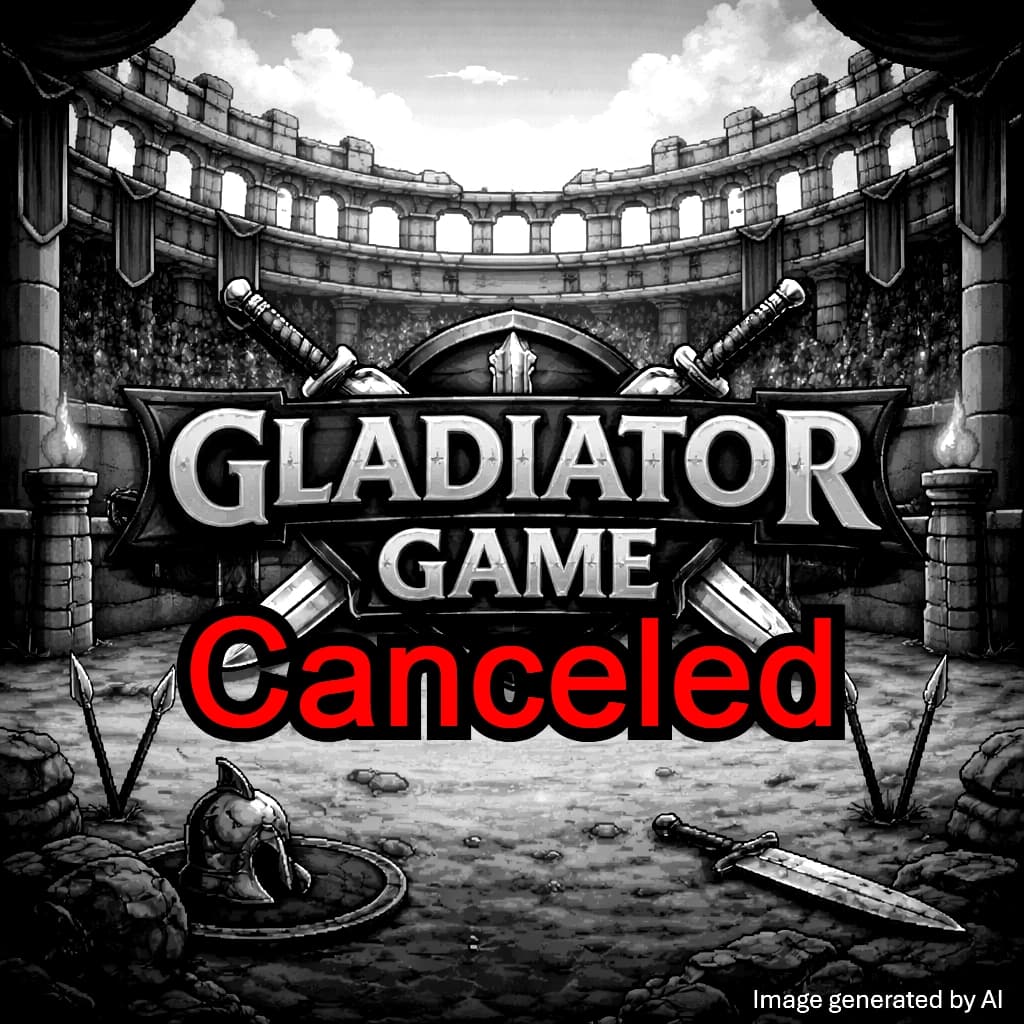
After running the prototype for a few months, I decided to cancel further development. The core gameplay loop was not as engaging as I had hoped, but it was a fun project to build and taught me a great deal about shipping and operating an online game.
Thank you to everyone who gave the game a try. The final leaderboards remain available as a static archive, but all in-game accounts and live services have been removed.
Development
This project was created primarily as a technical prototype to explore client-server architecture in game development. The client is built in Godot, while the backend is powered by a .NET API responsible for game logic, player data, matchmaking, and combat flow.
To support the online parts of the game, I also introduced a few technologies that were new and important to this prototype:
- PostgreSQL for storing users, gladiators, and match data
- Firebase Authentication as the foundation for the login system
The goal was not to create a fully polished game, but to experiment with:
- Server-authoritative game logic
- API design and communication between client and backend
- Persistent game data across players and matches
- Building a basic authentication flow for online accounts
- Networking workflows in Godot
- Expanding my experience with C# and .NET development
The project ended up being a great sandbox for understanding how a more scalable multiplayer game architecture could be structured, even at a small prototype level.
Challenges & Learnings
Working on this prototype introduced several new technical challenges:
- Designing a clean separation between client and server responsibilities
- Handling network communication and syncing game state
- Structuring a flexible API for game interactions
- Designing a data model for players, gladiators, and matches in PostgreSQL
- Connecting a game client and backend to an external authentication provider
- Managing randomized systems while keeping gameplay deterministic for server validation
This project was especially valuable in bridging the gap between single-player game development and more complex, networked systems. It pushed me to think less like a gameplay-only developer and more like someone building a complete online product.
Release Info
- Released: April 3, 2026
- Concluded: October 11, 2026
- Platform: Itch.io
- Engine: Godot 4.5 (GDScript)
- Backend: .NET API, PostgreSQL, Firebase Authentication
- Final snapshot: 38 players, 198 gladiators, and 1,404 recorded matches
- Status: Canceled; final Hall of Fame archived